Jointly initiated by: GreyBay Institute, Greater Bay Area Institute
Tel: +86 13538048576Address: 8 Yuanling 5th Street, Futian District, Shenzhen, Guangdong, China



In December 2020, GreyBay Institute researchers published the open-access paper Quantification of microplastics by count, size and morphology in beverage containers using Nile Red and ImageJ in the Journal of Water and Health. Addressing the policy question of whether disposable beverage cups are a major source of human microplastic exposure, the study used improved fluorescence staining and automated image analysis to provide a more rigorous quantitative assessment for consumer-risk communication and food-contact-material regulation.
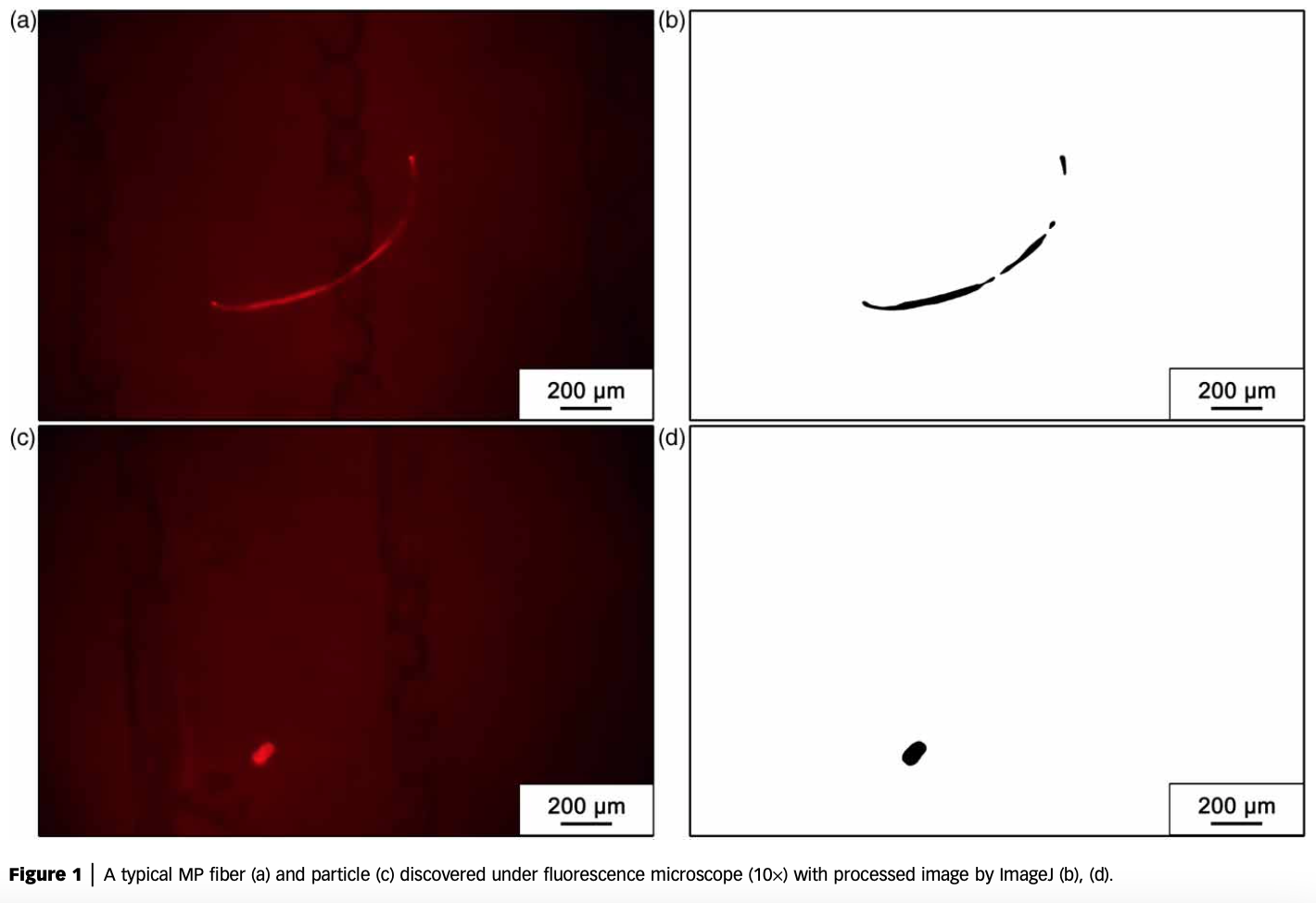
The team analysed 15 PLA-lined paper cups, 15 PLA-lined plastic cups, and 5 blank controls sold in New England, USA. By combining Nile Red staining, whole-filter microscopy, automated ImageJ-based identification, and morphology classification, the method lowered the detection threshold to 1 micrometre and introduced projected area and fibre-versus-particle morphology as core measurement dimensions, offering a high-throughput alternative to conventional FTIR workflows.
The central policy finding was reassuring: neither of the two common disposable cup types examined appeared to be a major source of human microplastic exposure. Plastic cups showed statistically significant differences from blanks for fibre count and fibre area, but not for particles or total microplastics; paper cups showed no significant differences across particle, fibre, or total indicators. This directly addresses public concern about the safety of takeaway coffee and cold-drink cups and offers empirical input for migration standards in food-contact-material regulation.
From a regulatory-science perspective, the study made three methodological contributions. First, it demonstrated that Nile Red staining plus automated image analysis is a reliable, low-cost, high-throughput screening method, with 98% polyethylene spike recovery compared with 96% for FTIR. Second, it showed that morphology matters: ignoring differences between fibres and particles may underestimate exposure burden. Third, it established a reproducible contamination-control protocol, including multiple blank controls, laminar-flow handling, and blinded counting, which can inform future standard operating procedures.
The paper also cautioned against overgeneralisation. Safety results for PLA cups should not automatically be extended to other materials such as polystyrene foam, recycled plastics, or extreme use conditions such as microwave heating and contact with oily liquids. The authors therefore called for stepwise exposure experiments by polymer type, temperature, and contact duration, together with morphology-specific toxicology studies.
Building on this framework, GreyBay now provides tailored services for regulators, consumer-goods companies, and testing laboratories, including microplastic-release inventories for food-contact materials, safety assessment of novel bioplastics and degradation products, and evaluation of microplastic interception efficiency in drinking-water treatment. For enquiries on methods, policy translation, or customised assessment services, please contact contact@greybay.org.
Publication:
Quantification of microplastics by count, size and morphology in beverage containers using Nile Red and ImageJ. Shujuan Chen, Yue Li et al. Journal of Water and Health, 2021 Feb 1;19(1):79-88.
DOI: 10.2166/wh.2020.171 | Open access
Link: https://iwaponline.com/jwh/article/19/1/79/78632/Quantification-of-microplastics-by-count-size-and?guestAccessKey=3a080642-09a8-4677-aa09-335bfe7f311d

Jointly initiated by: GreyBay Institute, Greater Bay Area Institute
Tel: +86 13538048576Address: 8 Yuanling 5th Street, Futian District, Shenzhen, Guangdong, China