Jointly initiated by: GreyBay Institute, Greater Bay Area Institute
Tel: +86 13538048576Address: 8 Yuanling 5th Street, Futian District, Shenzhen, Guangdong, China



In March 2023, GreyBay Institute researchers published Technical Efficiency Evaluation of Primary Health Care Institutions in Shenzhen, China, and Its Policy Implications under the COVID-19 Pandemic in the International Journal of Environmental Research and Public Health. Produced jointly with the Harvard T.H. Chan School of Public Health, this was one of the first longitudinal studies to examine how a major public-health emergency changed service efficiency in primary-care institutions across a mega-city.
Using panel data from Shenzhen primary health-care institutions between 2016 and 2020, the team combined data envelopment analysis, the Malmquist index, and Tobit regression to track efficiency changes before and during the pandemic. Environmental variables included operating income, the share of doctors and nurses among technical staff, doctor-nurse balance, service population, the share of children in the catchment area, and the density of nearby primary-care facilities.
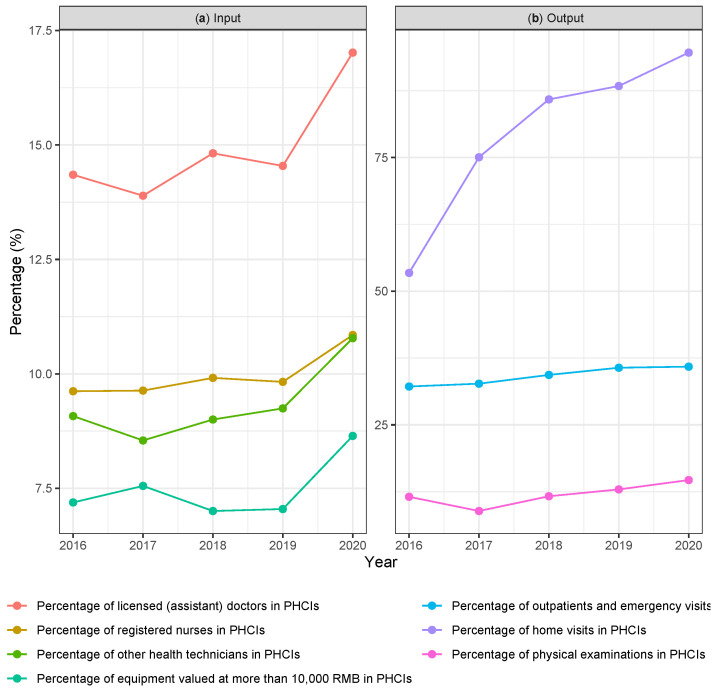
The study found that even though Shenzhen increased primary-care staffing and financial inputs during COVID-19, overall technical efficiency, pure technical efficiency, and scale efficiency were all notably low in 2017 and again in 2020. Total factor productivity fell by 24.6% in 2020 compared with the pre-pandemic period, reaching the lowest point in five years. The main driver was not insufficient input but deterioration in technical progress, suggesting that existing service models were too rigid under emergency conditions.
Regression analysis showed that operating income, staffing mix, service-population size, and the proportion of children in the catchment area were significant determinants of efficiency, while excessive spatial concentration of institutions appeared to generate unproductive competition.
The paper offers three main policy messages. First, cities need a more flexible balance between emergency-response duties and routine primary-care delivery; simply adding resources yields diminishing returns unless service models also change. GreyBay therefore recommends stronger use of telemedicine, AI-assisted diagnosis, and digital chronic-disease management to release latent efficiency. Second, efficiency monitoring should be moved from annual to quarterly cycles and linked to fiscal compensation and performance budgeting. Third, facility functions should be differentiated based on population structure, with stronger paediatric capacity in areas serving large numbers of children.
This work forms part of GreyBay's research on governance resilience in mega-city health systems. The team is now developing a digital-transformation maturity assessment tool for Shenzhen's primary-care institutions and supporting district-level technical-efficiency diagnostics for all community health centres in selected districts. For enquiries about the evaluation methods, policy translation, or customised advisory work, please contact contact@greybay.org.
Publication:
Technical Efficiency Evaluation of Primary Health Care Institutions in Shenzhen, China, and Its Policy Implications under the COVID-19 Pandemic. Yue Li et al. International Journal of Environmental Research and Public Health, 2023 Mar 2;20(5):4453.
DOI: 10.3390/ijerph20054453 | PMCID: PMC10001471
Link: https://pmc.ncbi.nlm.nih.gov/articles/PMC10001471/

Jointly initiated by: GreyBay Institute, Greater Bay Area Institute
Tel: +86 13538048576Address: 8 Yuanling 5th Street, Futian District, Shenzhen, Guangdong, China