Jointly initiated by: GreyBay Institute, Greater Bay Area Institute
Tel: +86 13538048576Address: 8 Yuanling 5th Street, Futian District, Shenzhen, Guangdong, China



In August 2021, GreyBay Institute completed the policy report Risk factors for harmful alcohol consumption during COVID-19: An integrative review on commission from Japan's National Institute of Public Health. Led by our team in collaboration with the Harvard T.H. Chan School of Public Health and the University of Tokyo, the report offers a panoramic evidence synthesis on alcohol-use risk in ageing, high-income East Asian societies during a major public-health emergency.
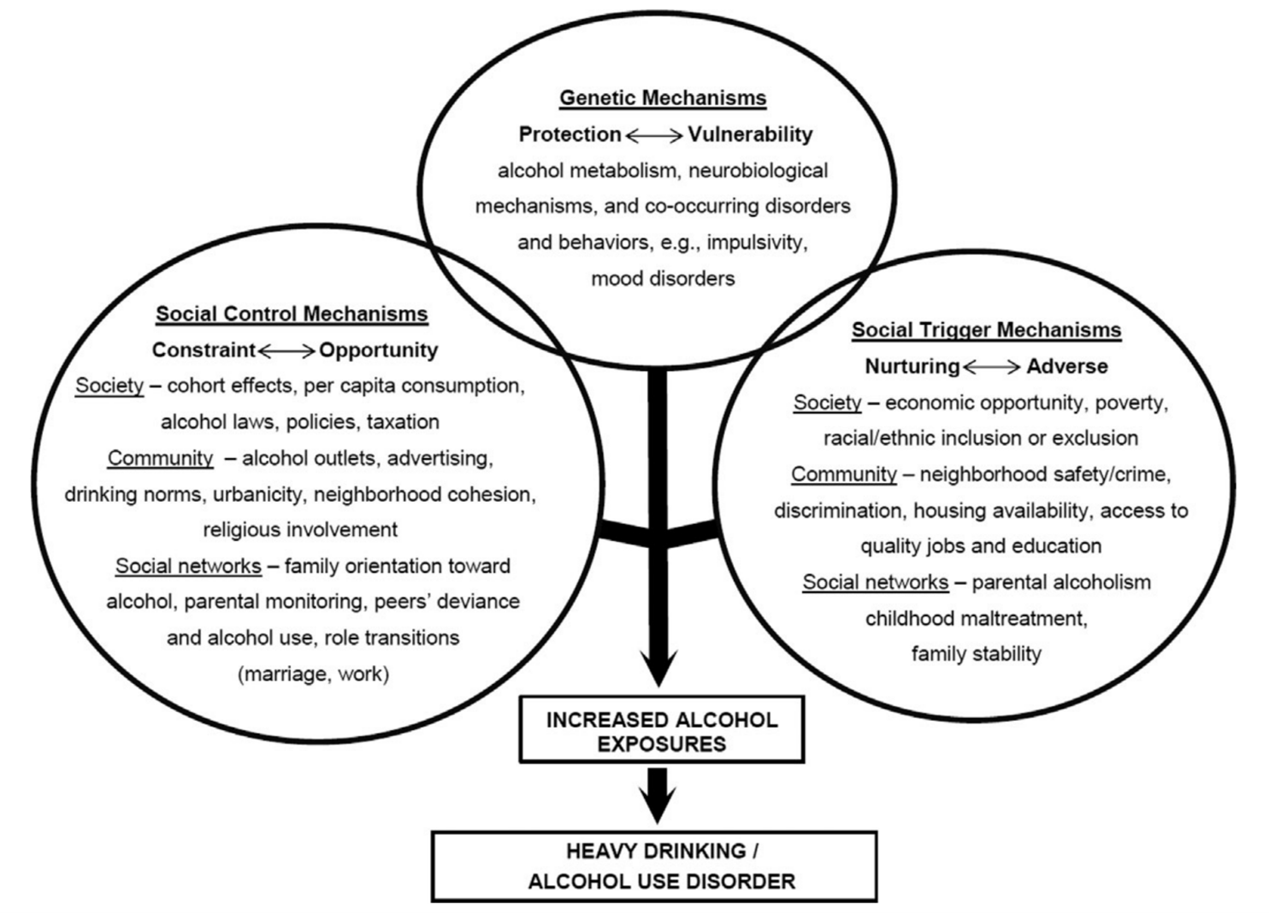
The team systematically screened 520 PubMed records published between 2011 and August 2021 and included 77 high-quality studies. The review organised risk factors into six layers: socioeconomic status, individual factors, interpersonal factors, community factors, media environment, and law and policy. That framework was later adopted by the Japanese National Institute of Public Health as a core assessment tool for its FY2022 alcohol-harm policy programme.
1. Key findings and policy implications
(1) Socioeconomic status. The review found a nonlinear relationship between social position and alcohol harm: higher-income groups drink more often, while lower-income groups tend to consume larger quantities per occasion and suffer greater alcohol-related damage. For Japan, where income poverty among OECD members remains high and non-regular employment is widespread, the report argues that alcohol policy must be designed together with anti-poverty measures and labour-market reform rather than relying on generic "drink responsibly" messaging alone.
(2) Individual-level factors. Men, adults aged 18-34, minority groups, and LGBTI populations were identified as high-risk groups, while the rise in alcohol consumption among women deserves special policy attention because women are biologically more vulnerable to alcohol-related harm. The report recommended adding AUDIT-C screening to age-20 health checks and expanding alcohol-free social options for universities and young adults. It also reviewed evidence on alcohol-metabolism genes such as ADH1B and ALDH2, noting the policy relevance of personalised risk communication for East Asian populations with high rates of ALDH2 deficiency.
(3) Psychological and behavioural mechanisms. Stress, anxiety, depression, loneliness, and self-medication motives were all strongly linked to harmful drinking. Pandemic-related conditions such as home working, disrupted sleep rhythms, and family cohabitation intensified these pathways. The report therefore recommends shifting part of alcohol policy from supply restriction toward "substitute satisfaction" strategies, including community mindfulness courses, app-based drinking-motive tracking, and digital cognitive behavioural therapy for insomnia.
(4) Interpersonal and community factors. Drinking attitudes among family members, peers, and colleagues exert a strong social-learning effect. Given the persistence of after-work drinking culture in Japan, the report proposed a workplace drinking-norm redesign package, including guidance for alcohol-free social events, explicit protection for refusing drinking pressure, and zero-alcohol safety certification pilots in high-risk industries. At community level, stronger outlet density was associated with higher drinking rates, supporting tighter control of late-night alcohol sales and locally tailored retail licensing rules.
(5) Media and environment. Alcohol depictions in film and television, social-media marketing, and celebrity endorsement were identified as strong predictors of young people's intention to drink. Evidence for blanket advertising bans remains limited, but the report recommends upgrading digital alcohol-marketing rules into enforceable regulations and evaluating them within Japan's long-term health monitoring system. It also notes that mass-media health communication can improve knowledge and attitudes, though evidence for direct behaviour change is weaker.
(6) Law and policy tools. The review confirmed that higher alcohol taxes, lower physical availability, restricted trading hours, minimum-age protections, and random breath testing are among the most cost-effective interventions in high-income settings. GreyBay's policy simulation suggested that a 20% alcohol-tax increase in Japan could avert about 32,000 alcohol-attributable deaths and save roughly JPY 480 billion in medical costs over ten years. The report also advised Japan to monitor the interaction between alcohol and drug policy when revising cannabis legislation.
2. COVID-19 marginal effects and vulnerable-group identification
A central concern of the report was to identify how the pandemic changed the exposure level and intensity of near-term alcohol risks. The review found that COVID-19 did not alter distal factors such as genetics or early-life experiences, but it sharply increased exposure to proximal stressors including unemployment, income loss, loneliness, disrupted sleep, teleworking, living with children, and cyberbullying. These factors amplified harmful drinking through coping-motive pathways.
To respond, the report proposed a three-stage framework of observable risk markers, stratified screening, and targeted intervention. At municipal level, resident registries and health-insurance data could be used to map high-risk communities. At public-health-centre level, mail-based AUDIT screening could be deployed in those communities. At community support-centre level, people screening positive could receive low-intensity digital support, with severe cases referred onward to specialist mental-health services.
3. Policy translation and follow-up collaboration
This was GreyBay Institute's first national public-health policy consulting project for a developed East Asian economy and marked an important step in our evidence-based health policy portfolio. Building on the collaboration, the Japanese National Institute of Public Health signed a three-year memorandum with GreyBay to pursue joint work on digital alcohol screening tools for older East Asian men, a China-Japan-Korea alcohol policy database, and an Asia-Pacific implementation-science collaboration network for alcohol policy.
The team is now using the report's evidence map and analytic framework to support the preparation of Shenzhen guidance on community screening and intervention for alcohol-use disorder, while adapting Japanese workplace experience for local healthy-enterprise standards. For enquiries about the review methods, policy toolkit, or customised regional alcohol-health impact assessments, please contact contact@greybay.org.
Report information:
Title: Risk factors for harmful alcohol consumption during COVID-19: An integrative review
Commissioned by: National Institute of Public Health, Japan (under commission from the Ministry of Health, Labour and Welfare)
Prepared by: GreyBay Institute
Completion date: August 2021
Core method: Scoping review
Analytical framework: Six-level risk-factor model (socioeconomic / individual / interpersonal / community / media / policy)

Jointly initiated by: GreyBay Institute, Greater Bay Area Institute
Tel: +86 13538048576Address: 8 Yuanling 5th Street, Futian District, Shenzhen, Guangdong, China