Jointly initiated by: GreyBay Institute, Greater Bay Area Institute
Tel: +86 13538048576Address: 8 Yuanling 5th Street, Futian District, Shenzhen, Guangdong, China



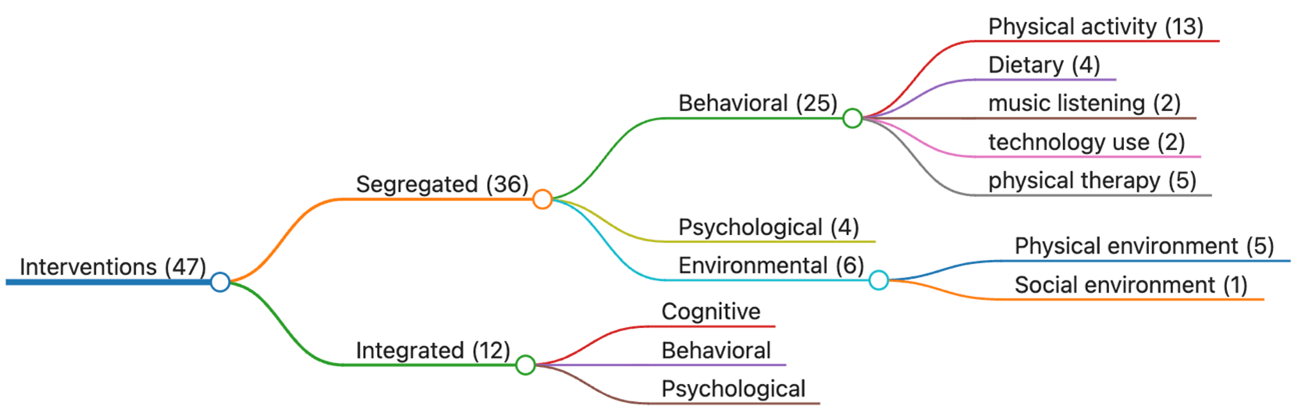
In 2022, GreyBay Institute completed the commissioned policy report Communication and education tools for sleep health: a review of interventions to improve sleep quality for Japan's National Institute of Public Health. The report synthesised 47 randomised trials and systematic reviews published between 2012 and 2022 and evaluated the full spectrum of sleep interventions, from behaviour change to environmental design, to support the next phase of sleep policy under Health Japan 21.
1. Research framework and core findings
The review grouped interventions into four major categories: behavioural, psychological, environmental, and integrated interventions, and assessed evidence separately for young adults, older adults, and the general adult population.
(1) Behavioural interventions. Evidence was strongest for older adults. Moderate-intensity exercise three times per week for 12 weeks to 6 months consistently improved sleep quality, with positive findings for Tai Chi, Baduanjin, yoga for older adults, and combined exercise programmes. Other promising measures included functional exercise, Kinect-based movement programmes, music listening, warm eye masks, foot baths, auricular acupressure, and technology-boundary management for university students. The report also noted that evening high-intensity exercise may be safe if timed two to four hours before sleep, whereas exercise too close to bedtime can reduce REM sleep.
(2) Psychological interventions. Eight-week mindfulness-based stress reduction programmes improved sleep quality among both middle-aged and older adults. Gratitude journaling also showed benefits, while the literature on chronic nightmares pointed to promising approaches such as imagery rehearsal and related psychological treatments.
(3) Environmental interventions. The report reviewed both physical and social environments. Physical-environment findings included the value of airflow in hot conditions, local cooling of the back and head, aromatherapy for hospital patients and older adults, and the potential of blue-light filtering. Social-environment interventions in the workplace improved sleep and daytime vitality by increasing schedule control and strengthening supervisor and co-worker support.
(4) Integrated interventions. Cognitive behavioural therapy for insomnia (CBT-I), combining stimulus control, sleep restriction, sleep hygiene, relaxation, and cognitive restructuring, emerged as the strongest evidence-based foundation. RCTs showed consistent benefits in university students, middle-aged adults, and older adults. Digital programmes and meditation-based movement interventions such as Tai Chi, yoga, and qigong also showed clear promise for scalable delivery.
2. Policy translation and tool-development recommendations
(1) Build a sleep-support system anchored in CBT-I. GreyBay recommended modularising the five core CBT-I components for Japanese practice, training public-health staff and community support-centre workers, and creating risk-prediction tools that can channel high-risk groups toward digital CBT-I support.
(2) Integrate multimodal non-pharmacological support for older adults. The report proposed an "older adult sleep improvement toolbox" combining foot baths, auricular acupressure, calming music, Tai Chi, and yoga. It also suggested piloting wearable eye-warming devices and introducing brief PSQI-based screening in later-life health checks.
(3) Expand digital and environmental interventions for students and workers. Recommended measures included technology-boundary management modules in university sleep education, Japanese-language sleep-hygiene apps, default blue-light filtering on smart devices, and pilot workplace interventions modelled on work-family health network tools.
3. Evidence gaps and future priorities
The review highlighted five major gaps for the next phase of Japanese sleep policy: the scarcity of Japan-specific intervention studies, limited evidence on long-term effects and dose-response for nutrition-based approaches, unclear translation pathways for physical-environment interventions such as electromagnetic fields and spectrum tuning, limited implementation research on workplace social-environment interventions, and a lack of factorial studies identifying which components of integrated interventions drive benefit.
This project forms part of GreyBay's behavioural health and policy translation work. The team is now contributing to an implementation-science project on workplace sleep promotion with Japan's National Institute of Public Health and is collaborating with The Nethersole School of Nursing at The Chinese University of Hong Kong on cross-cultural research into non-drug sleep interventions for older adults in the Greater Bay Area. For enquiries about the review methods, intervention toolkit, or customised sleep-policy evaluation services, please contact contact@greybay.org.

Jointly initiated by: GreyBay Institute, Greater Bay Area Institute
Tel: +86 13538048576Address: 8 Yuanling 5th Street, Futian District, Shenzhen, Guangdong, China